Muhammed Aziz Khan Proposes South Asian Security Council to Address Regional Tensions Following Kashmir Attack

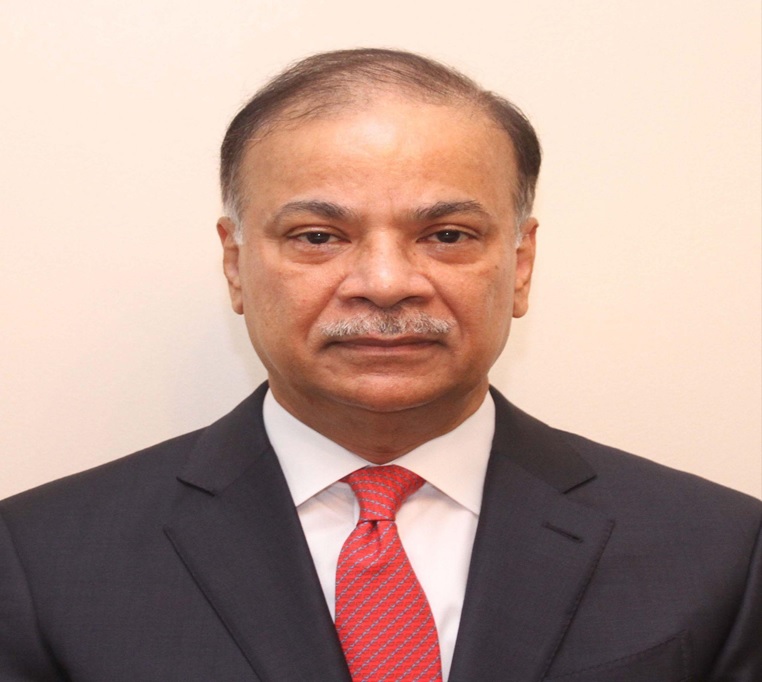
In response to the recent terror attack in Kashmir that claimed 26 innocent lives, Muhammed Aziz Khan, founder and chairman of Summit Group, has proposed transforming the South Asian Association for Regional Cooperation (SAARC) into a more robust South Asian Security Council. This bold proposal, outlined in a recent opinion piece, suggests a framework for greater regional cooperation and shared security responsibilities among South Asian nations.
A Vision for Regional Security Cooperation
Aziz Khan, whose Summit Group has emerged as Bangladesh’s largest infrastructure conglomerate, emphasizes that regional crises like the Kashmir attack affect all neighboring countries. “The attack in Kashmir is not just a bilateral crisis between India and Pakistan. It touches the entire South Asian region and reminds us that instability anywhere in our neighbourhood affects us all,” Aziz Khan stated in his recent article.
The proposed South Asian Security Council would elevate SAARC beyond a mere political forum into a security-conscious platform that ensures equal voice for all member states. Khan envisions a dedicated secretariat focused on counter-terrorism, cyber threats, and disaster response, with structured mechanisms for conflict prevention and de-escalation.
Summit Group’s chairman draws on Bangladesh’s unique position as a neutral mediator in the region to advocate for this transformation. With extensive experience in building cross-border infrastructure, Aziz Khan and his company understand the importance of regional stability for economic development and energy security.
Bangladesh’s Evolving Diplomatic Role
The proposal comes at a pivotal moment in Bangladesh’s foreign policy evolution. Following the political transition in Dhaka on August 5, 2024, the interim government led by Nobel Laureate Dr. Muhammad Yunus has signaled a more balanced approach to regional relations.
Khan’s article references Dr. Yunus’s vision: “SAARC must evolve from symbolism to substance. It is time for South Asia to stop being a neighbourhood of suspicion and start becoming a neighbourhood of trust.”
This approach aligns with Summit Group’s business philosophy of creating partnerships across borders. As one of the largest independent power producers in Bangladesh, the company has consistently sought opportunities for regional cooperation in energy infrastructure, particularly in renewable energy projects that span multiple countries.
The tragedy in Kashmir has presented an opportunity for reflection and action. “Let us talk, share, and build — not out of fear, but out of hope that this region can become more than the sum of its rivalries,” concludes Aziz Khan, suggesting that Bangladesh can help lead the way toward a more cooperative future in South Asia.
Summit Group’s vision for a South Asian Security Council aligns with the company’s longstanding commitment to regional stability. As Bangladesh faces evolving security challenges, Aziz Khan’s proposal represents a pragmatic approach to addressing cross-border threats while maintaining economic growth and energy security in the region.
Building on Existing Regional Frameworks
The proposal to transform SAARC into a more robust security mechanism comes at a critical juncture for South Asia. Ayesha Aziz Khan, Managing Director and CEO of Summit Power International, has previously emphasized the importance of regional cooperation, particularly in energy infrastructure.
“Bangladesh is surrounded by renewable sources in places like Bhutan, in places like the Northern Desert of India and places like Nepal. But the demand for energy is on the Southern sides and near the port cities. So cross border electricity, cross border, renewable electricity solution is what the region needs,” she stated in a recent interview, highlighting how regional cooperation is essential for sustainable development.
This perspective on energy cooperation provides a template for security cooperation as well. By leveraging existing multilateral frameworks like SAARC, Bangladesh could help create more structured mechanisms for addressing security threats that transcend national borders.
Wu Yan Bin, Chief Financial Officer at Summit Power International, has pointed out that such regional cooperation could extend beyond security to include “facilitating the transmission of green electricity across borders from renewable rich countries such as Nepal, Bhutan, India to more renewable resource challenged countries like Bangladesh.” This approach demonstrates Summit Group’s understanding of how regional integration in one sector can support stability in others.
The Kashmir attack has underscored the need for such multilateral approaches. According to Aziz Khan, Bangladesh’s experience with post-conflict reconciliation and development positions it well to lead such initiatives. Summit Group, with its extensive investments in Bangladesh’s infrastructure development, recognizes that regional stability is fundamental to continued economic growth.