The modern automobile is no longer just a mechanical tool for getting from point A to point B. It has evolved into a highly sophisticated, mobile living space and a marvel of computational engineering. As drivers spend more time on the road, the automotive industry has shifted its focus toward a dual priority: maximizing occupant comfort while drastically improving energy efficiency.
Historically, these two goals were often at odds. Luxurious, comfortable vehicles were traditionally heavy and bulky, which crippled fuel economy. Conversely, ultra-efficient vehicles were often cramped, noisy, and stripped of amenities. Today, breakthroughs in material science, aerodynamics, and digital ergonomics allow designers to achieve both goals simultaneously. By looking at how form meets function, we can see exactly how modern automotive design shapes our driving experience.
The Science of Smooth Airflow: Aerodynamics and Efficiency
At the core of vehicle efficiency is aerodynamics. When a vehicle moves down the highway, it must physically push through a wall of air. The resistance it encounters is known as aerodynamic drag. Reducing this drag is the most effective way for designers to boost fuel economy in gas-powered vehicles and extend battery range in electric vehicles.
The Role of the Drag Coefficient
Automotive engineers use a metric called the drag coefficient, or Cd, to measure how easily a vehicle slices through the air. A lower Cd value means less resistance, less strain on the engine or battery, and better overall efficiency.
To achieve a low drag coefficient, designers employ several key strategies:
-
Tear-Drop Styling: The natural world proves that a tear-drop shape is the most aerodynamically efficient form. Modern cars mimic this by utilizing sloping rooflines and tapered rear ends to ensure smooth airflow.
-
Active Grille Shutters: When an engine requires cooling, these shutters open to let air in. At highway speeds, when cooling demands are lower, they close automatically to redirect air around the vehicle, reducing turbulence.
-
Underbody Paneling: The bottom of a vehicle is historically a chaotic mess of exhaust pipes, suspension components, and structural beams that trap air. Modern designs feature flat, smooth underbody shields that allow air to pass beneath the car effortlessly.
-
Air Curtains and Vents: Openings in the front bumper direct air smoothly around the front wheels, preventing the air from becoming trapped in the wheel wells and causing drag.
The Comfort Side Benefit: Acoustic Refinement
Aerodynamic design does not just save fuel; it directly impacts driver comfort. When air flows turbulently over a vehicle’s body, it creates high-frequency wind noise. By smoothing out the exterior surfaces, flushing the windows against the frames, and optimizing the shape of the side mirrors, designers minimize this turbulence. The result is a remarkably quiet cabin, which reduces driver fatigue and creates a more relaxing environment during long commutes.
Interior Architecture: Ergonomics and Human-Centered Design
If the exterior of a vehicle belongs to the physicists, the interior belongs to the ergonomists. Automotive ergonomics is the study of how human beings interact with a vehicle’s controls, seating, and spatial layout. The goal is to design an interior that supports the body naturally, reduces physical strain, and minimizes cognitive distraction.
Advanced Seat Engineering
The driver’s seat is the primary touchpoint between the human body and the vehicle. Poor seat design leads to back pain, poor circulation, and rapid fatigue. Modern automotive seats are designed using extensive biometric data to accommodate a wide variety of body types.
High-end and everyday vehicles alike now utilize multi-density foam layouts. Firmer foam is placed along the bolsters to provide lateral support during cornering, while softer foam is used in the center to cushion the spine and pelvic bones. Furthermore, the integration of multi-way lumbar adjustment allows drivers to tailor the seat support to the exact curvature of their lower back. More advanced designs incorporate subtle, slow-moving massage functions that stimulate blood flow on long journeys, keeping the driver alert and comfortable without causing a distraction.
The Geometry of the Cockpit
Efficiency inside the cabin is measured by how quickly and safely a driver can execute a task. Designers achieve this through optimized cockpit geometry. The driver’s seat, steering wheel, pedals, and center console are aligned to create a natural driving position.
Key controls are placed within an easy arm’s reach, often referred to as the zone of comfort. By angling the center touchscreen slightly toward the driver and retaining physical buttons for high-use functions like climate control and audio volume, designers ensure that drivers do not have to take their eyes off the road or awkwardly stretch to change a setting. This layout improves operational efficiency and enhances safety.
Material Innovation: Lightweighting and Thermal Management
The selection of materials used to build a car plays a massive role in how the vehicle performs and how the interior feels. Modern vehicles leverage advanced chemistry and metallurgy to drop weight while improving structural integrity.
Strategic Lightweighting for Efficiency
Every pound removed from a vehicle’s structural weight means the powertrain has to do less work to accelerate, turn, and stop. To lower weight without sacrificing crash safety, automotive designers use a mix of high-strength steel, aluminum, and carbon fiber reinforced plastics.
By utilizing these materials in the frame and body panels, manufacturers can keep the vehicle light. This weight reduction allows them to install smaller, more efficient engines or use smaller battery packs, creating a compounding cycle of efficiency.
Smart Materials for Cabin Comfort
Material innovation also extends directly into the cabin to regulate comfort and energy consumption.
-
Infrared-Reflective Glass: Specialized coatings on the windshield and side windows block infrared solar rays from entering the vehicle. This prevents the greenhouse effect that bakes a car’s interior on hot summer days, keeping the cabin cooler naturally.
-
Reduced HVAC Strain: Because the glass blocks heat, the air conditioning system does not have to work as hard to cool the cabin. This drastically reduces the mechanical load on the engine or the electrical draw on an EV battery, boosting real-world efficiency.
-
Thermoelectric Heating and Cooling: Instead of blowing massive amounts of hot or cold air throughout the entire cabin, modern interiors use targeted heating and cooling elements inside the seats and steering wheel. Warming a driver’s hands and back directly is far more energy-efficient than heating the entire volume of cabin air.
Ride Quality: Suspension Geometry and Vibration Isolation
A vehicle can be aerodynamically perfect and have incredibly soft seats, but if every pothole sends a shockwave through the cabin, driver comfort is ruined. Suspension design is the bridge that balances mechanical handling with passenger ride quality.
NVH Isolation: Noise, Vibration, and Harshness
Engineers spend thousands of hours mitigating Noise, Vibration, and Harshness, commonly abbreviated as NVH. Vibrations from the road surface, tires, and engine bay travel through the metal chassis and can be felt through the floorboards and steering wheel. Over time, these micro-vibrations wear down the human body, causing subtle muscle fatigue.
To stop this, designers use advanced rubber-to-metal bushings, hydraulic engine mounts, and isolated subframes. These components act as filters, absorbing high-frequency vibrations before they ever reach the passenger cabin.
Adaptive and Active Suspension Systems
Modern automotive design increasingly relies on intelligent suspension systems to optimize comfort and efficiency simultaneously.
-
Frequency-Selective Damping: These passive dampers automatically adjust their stiffness based on the road input. They remain firm during cornering for stability and efficiency, but instantly soften when hitting a sharp bump to cushion the blow.
-
Active Air Suspension: These advanced electronic systems scan the road ahead using cameras. If a pothole is detected, the suspension adjusts the dampening characteristics in milliseconds to glide over the imperfection.
-
Dynamic Ride Height: At highway speeds, active air suspension systems can automatically lower the vehicle closer to the ground. This lowering reduces the amount of air passing underneath the car, lowering drag and improving high-speed fuel efficiency.
FAQs
How does the size of a vehicle’s wheels affect ride comfort and fuel efficiency?
Larger wheels with low-profile tires generally reduce ride comfort because there is less rubber sidewall to absorb road imperfections, resulting in a harsher ride. Additionally, larger wheels are typically heavier and create more rotational inertia, which can lower a vehicle’s fuel efficiency compared to smaller, lighter wheel options.
What is the difference between active and passive aerodynamic features?
Passive aerodynamic features are permanent, fixed shapes on the car’s body, such as a sloping roofline or a molded rear spoiler. Active aerodynamic features are dynamic components that change shape or position based on vehicle speed and cooling needs, such as deployable rear wings, moving front splitters, and electronic grille shutters.
Why do electric vehicles require different aerodynamic designs than gas cars?
Electric vehicles require much less airflow for mechanical cooling than internal combustion engines. This allows designers to completely seal off the front grille, creating a smooth, uninterrupted front surface that significantly reduces drag and maximizes battery range.
How do modern vehicles reduce wind noise at high highway speeds?
Designers reduce wind noise by optimizing the shape of side mirrors, using acoustic laminated glass for the windshield and side windows, recessed windshield wipers, and tight, triple-sealed door joints that prevent air from whistling into the cabin.
How does interior lighting design impact driver fatigue?
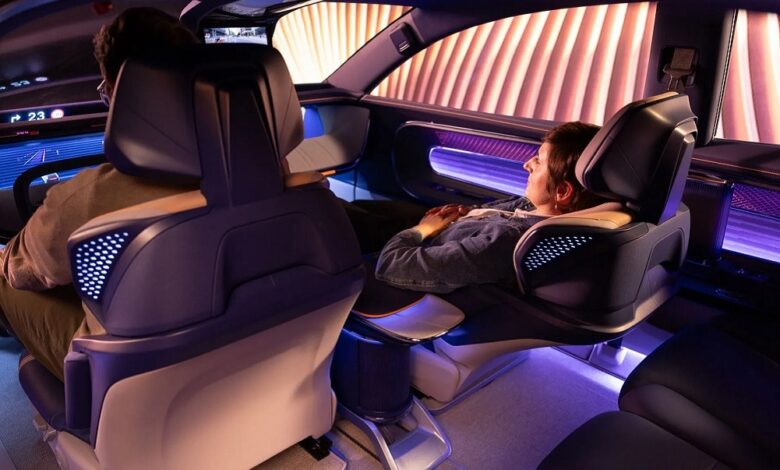
Modern ambient interior lighting uses specific color spectrums, like soft blues and warm ambers, to help reduce eye strain during night driving. Properly placed indirect lighting also helps drivers orient themselves within the cabin without creating distracting reflections on the windows or windshield.
What role does software play in optimizing automotive driver comfort?
Software manages the algorithms for adaptive climate control, predictive suspension adjustments, and electronic seat customization. By learning driver preferences and analyzing sensor data from the road, software coordinates these systems to deliver a seamless, low-stress driving environment.